

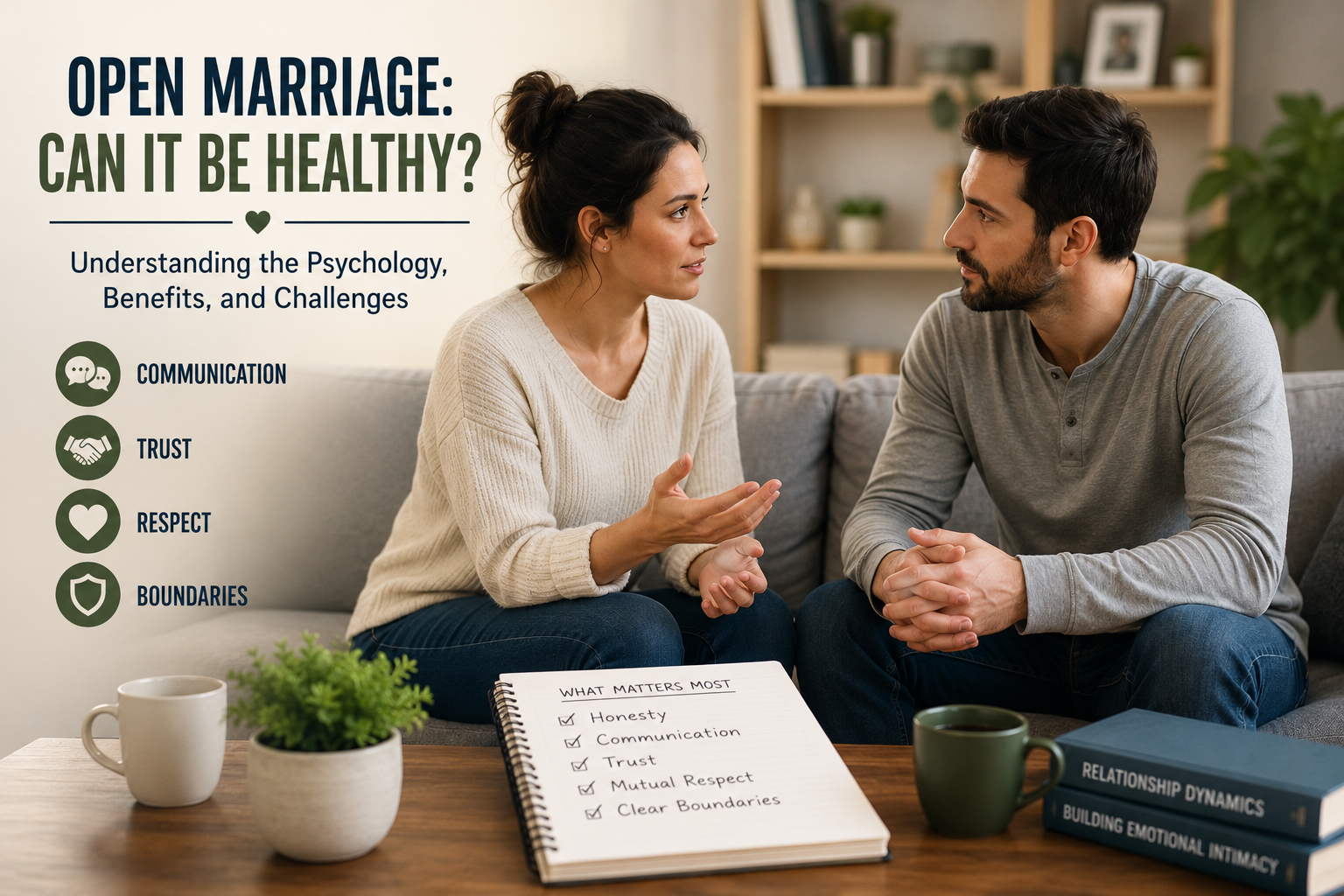
Are Open Marriages Psychologically Healthy for Couples?

The idea of an open marriage has become increasingly visible in recent years, thanks to changing social attitudes and discussions in popular culture. While some couples view non-monogamy as a way to maintain personal freedom and strengthen honesty, others believe it undermines the trust and exclusivity that traditionally define marriage. So, are open marriages psychologically healthy? The answer is more nuanced than a simple yes or no.
An open marriage is a consensual relationship in which married partners agree that one or both may have romantic or sexual relationships with other people. The key distinction between an open marriage and infidelity is mutual consent. Unlike cheating, where trust is broken through deception, ethical non-monogamy is based on transparency, communication, and agreed-upon boundaries.
How To Fix Website Loading Slow
Psychological research suggests that relationship satisfaction depends less on whether a couple is monogamous or non-monogamous and more on the quality of the relationship itself. Studies have found that couples who practice ethical non-monogamy can report levels of trust, commitment, and relationship satisfaction similar to those in monogamous marriages—provided both partners genuinely desire the arrangement rather than feeling pressured into it.
However, open marriages are not without challenges. Feelings of jealousy, insecurity, fear of abandonment, and unequal expectations can create emotional strain. If one partner agrees to an open marriage simply to avoid losing the relationship or to satisfy the other spouse, resentment often develops over time. Healthy communication, emotional maturity, and clearly defined boundaries become essential for navigating these complex emotions.
Monogamous marriages also face challenges, but they typically rely on exclusivity as a foundation for intimacy and trust. Many couples find that emotional security grows through shared commitment and mutual loyalty. For these individuals, introducing outside relationships may conflict with their personal values or emotional needs, making an open marriage psychologically unhealthy for them.
Popular culture frequently highlights celebrity relationships as examples of open marriages, but these highly publicized stories rarely provide an accurate picture of everyday relationships. Every marriage has unique dynamics, and judging the success or failure of an entire relationship model based on celebrity experiences can be misleading.
How To Make Cheap & Reliable International Calls:Talk360
Ultimately, no single relationship structure guarantees happiness or failure. Psychological well-being in marriage is shaped by factors such as mutual respect, honesty, emotional safety, effective conflict resolution, and shared expectations. An open marriage can only function when both partners freely choose it, communicate openly, and continuously respect each other’s boundaries. Likewise, a traditional monogamous marriage thrives when both spouses are equally committed to exclusivity and trust.
Hostinger The World’s Top Hosting Providers
Rather than asking whether open marriages are universally healthy or unhealthy, a more meaningful question is whether the relationship aligns with the values, emotional needs, and long-term goals of both partners. A successful marriage—whether monogamous or consensually non-monogamous—is built on genuine consent, mutual respect, and unwavering honesty. Without those foundations, any relationship is likely to struggle, regardless of its structure.


